Attunement in the NICU: matrescence, sensory cues and the neuroscience behind the struggle
Jun 12, 2026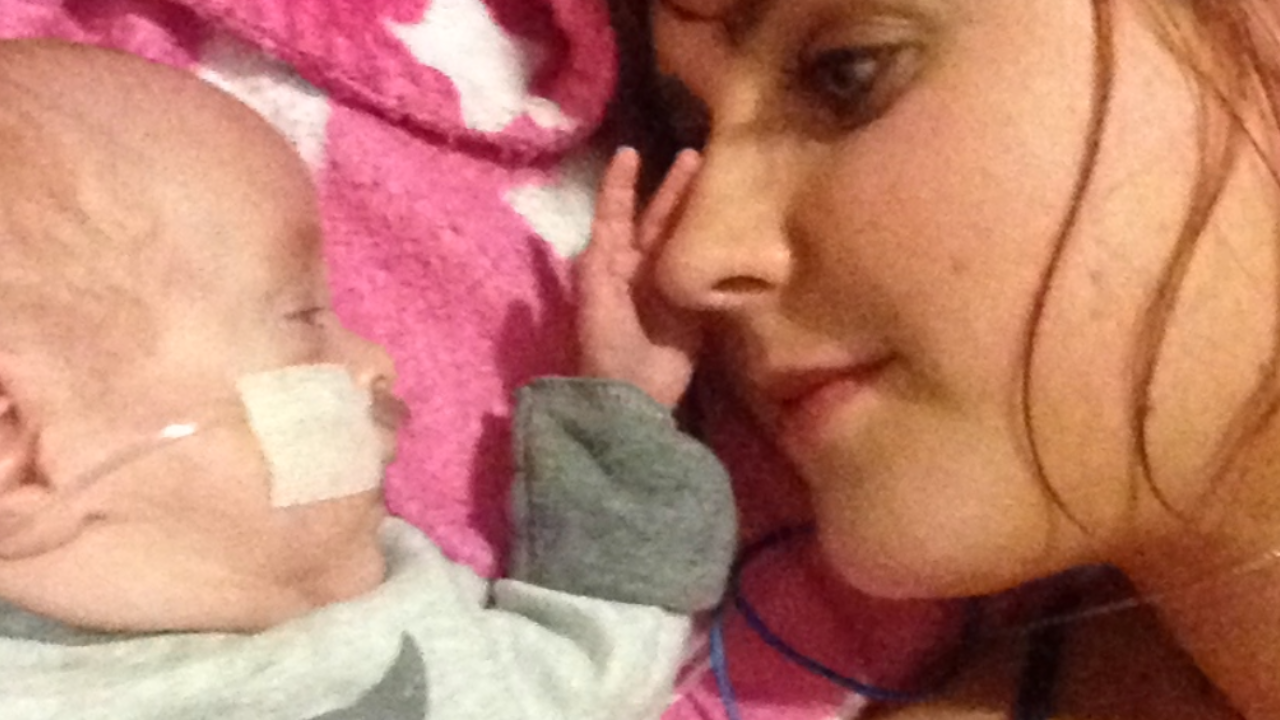
Every Infant Mental Health Week, my feed fills with the word attunement. The noticing, the responding, and the importance of all of it for babies and infants in their development.
But I want to talk about what attunement looks like when the cues a parent is biologically primed to receive through matrescence are behind a perspex box, wrapped in wires, where permission to interact, to parent, can be unavailable, or where those cues are simply not available yet.
Because for mothers in neonatal care, becoming a parent and the brain changes that come with it do not pause for the NICU.
Matrescence happens anyway. It just happens in an environment that was never designed for it.
Becoming a parent is a neurodevelopmental event
Matrescence, first named by Dana Raphael in 1973, is the structural, functional, neurochemical and psychosocial reorganisation that occurs as a person becomes a mother. The parallel process in fathers and non-birthing parents, patrescence, is less studied but real. Caregiving itself appears able to reshape the brain.
The most useful way to explain this is to think of matrescence like adolescence. It is hormonal, it is neuroplastic, and it is identity-shifting. Some studies have found the pattern of change so similar that the two are difficult to tell apart.
Large-scale brain reorganisation unfolds over months and years. Grey matter is refined, connectivity changes, and the brain becomes more selectively responsive to socially and emotionally relevant information, especially infant cues.
These changes persist for at least two years postpartum. We do not all bounce back at the six to eight week check.
Why the maternal reward network matters
Here is the part we rarely explain to parents, or to the teams supporting them.
Pregnancy and early parenthood ramp up the dopaminergic reward system. The brain reorganises so that infant cues become rewarding and worth pursuing: the smell of a newborn's head, the grasp of a hand, the gaze, the root toward the breast, the cry that calms upon being held.
Running alongside this, salience networks in the insula and anterior cingulate prioritise the baby's signals over almost everything else. Oxytocin threads through bonding, stress buffering and fear regulation, and prolactin shifts attention toward caregiving.
This is the neurobiology of attunement.
A parent reads a cue, responds to it, and the act of successful caregiving lands in the reward circuitry as something that felt good and is worth doing again. Serve, return, reward, repeat. That loop is how bonding builds itself, one small rewarded exchange at a time. Each individual moment where you know you are making a difference, and it matters.
Attunement, in other words, is not only a psychological skill. It is a reward loop that depends on the cues being available to receive.
In the NICU, the cues are interrupted, muted, or not ready yet
There are many reasons those cues do not reach a parent in neonatal care.
Baby is in an incubator. Holding may not be possible for hours, days, or weeks. Skin to skin, one of the richest sources of oxytocin and reward for both parent and baby, may be delayed, or the parent may feel uneasy to engage, or it may depend on the stability of the baby.
The newborn smell is replaced by antiseptic.
Eye contact may be limited by prematurity, sedation, or light protection.
The cry that a parent is wired to answer may be silenced by a tube.
Feeding, that powerful caregiving reward, is mediated by lines and charts, by ounces and millilitres.
The baby's signals often reach the parent through a monitor rather than through their own arms.
The cues a parent's brain has been rebuilt to seek are, in many cases, simply not reaching them. And so the loop cannot complete. In some cases, where significant autonomic changes occur during a cuddle, the brain may even tag the mother's interaction as a threat to her baby.
The global parental caregiving network
It helps to understand that caregiving is not run by a single maternal centre in the brain. It is run by a global parental caregiving network, a constellation of systems working together.
There is the motivation and reward system, driven by dopamine through the medial preoptic area, ventral tegmental area, nucleus accumbens and ventral striatum, which makes caregiving feel compelling.
There is the salience network, anchored in the anterior insula and dorsal anterior cingulate, which decides what matters right now.
The amygdala sits across these systems. It rapidly detects the salience of infant cues and links that emotional salience to the reward and motivation circuitry, and its connectivity with the nucleus accumbens strengthens across the postpartum months in step with positive caregiving behaviour, which is part of why a baby's signals can feel both so urgent and so compelling (Abraham et al., 2014; Dufford et al., 2019).
There is the emotion regulation network in the medial prefrontal cortex, and the empathy and Theory of Mind systems that let a parent read and resonate with their baby.
Across pregnancy and early parenthood, these systems become increasingly specialised for detecting infant cues and coordinating a response (Swain et al., 2014; Abraham et al., 2014).
Here is the crucial part. This entire network is tuned and reinforced by sensory input from the baby. Touch, warmth, smell, the rhythm of suckling, proximity, gaze, and the familiar sound of a cry are the signals the system needs to stay organised around caregiving (Walter et al., 2021; Schneider-Schmid et al., 2025).
When cues are reduced, as they so often are in the NICU, the consequence is not neutral. Research suggests that reduced exposure to infant cues is associated with lower activation in brain regions involved in social and emotional processing, including the amygdala and posterior cingulate cortex, while threat-detection systems become more dominant (Bickart et al., 2012; Guo et al., 2018).
The caregiving network does not disappear. It is that in the context of the NICU, where there are continual cues of danger, the threat detection system takes over.
This is not an absence of care or attachment. It is the temporary dominance of survival physiology over caregiving reward systems. And because these systems stay plastic, when safety, connection and predictable contact are restored, the caregiving network can re-engage.
When matrescence is interrupted: preterm birth and the oxytocin loop
For a mother whose baby is born preterm, this interruption begins even earlier.
Matrescence is not only a postpartum event. The brain and body are primed across pregnancy, with the final weeks playing a particular role in readying a mother, hormonally and neurally, for a baby she will hold, feed, warm, and keep close. Preterm birth signals the end of that pregnancy, and may be followed by birth trauma.
The mother is asked to begin mothering a baby her biology was still getting ready to meet. So when we hand the mum of a 24 weeker a breast pump and expect her body to be able to deliver on that ask, without any sensory cues from the infant, it is a real struggle to get the body to do something it may not be ready to do yet.
This is where oxytocin matters so much. Oxytocin is far more than the love hormone. It is woven through bonding, stress buffering and fear regulation, and it works in close interaction with the autonomic nervous system and the body's safety processes (Carter, 2014).
Crucially, oxytocin is released through contact: skin to skin, holding, gaze, warmth, the rhythm of feeding and suckling. The system is designed to be switched on, again and again, by physical closeness with the baby.
In the NICU, those are precisely the inputs that separation removes. The mother is apart from her baby, often unable to hold, with skin to skin delayed and feeding mediated by tubes and pumps. The very contact that should be releasing oxytocin, calming her stress response, and reinforcing the bond is interrupted.
At the same time, the chronic stress of the NICU floods the system with stress hormones and threat signalling, which can further dampen oxytocin's effects. So the neurochemistry of bonding is being starved of its inputs at the exact moment a remodelling maternal brain most needs it.
We are witnessing a bonding system that has been physiologically interrupted, in a brain that was not yet finished preparing. Understanding that changes everything about how we read, and how we support, mothers in the NICU.
Stress quietens the very response that helps a mother tune in
The NICU is a chronically stressful, threat-rich environment. Alarms, concerned faces, noise, warmth, extreme decision making. Parents are thrust into a world their body was never prepared for.
Under sustained stress, reward sensitivity is dampened. The ventral striatum, a key reward hub, shows attenuated activation, while threat detection is amplified. So at the very moment a parent most needs their reward system to help them bond, the environment is biasing that system toward vigilance and away from joy and relief.
This is not abstract. In a study of first-time mothers, higher stress exposure across socioeconomic, environmental and psychosocial domains was linked to a reduced brain response to the sound of an infant's cry, in regions central to emotional and social information processing such as the insula and inferior frontal gyrus. That blunted response was itself associated with lower maternal sensitivity during mother and infant interaction (Kim et al., 2020).
In other words, stress can quieten the very neural response that helps a mother tune in to her baby, and that quietening shows up in how she is able to respond.
This is one of the clearest demonstrations of why reducing parental stress where possible in the NICU is not separate from supporting bonding. It is the same task.
So what does attunement actually look like here?
This is the reframe I want to offer.
If we measure NICU attunement against the non-NICU baby, without considering the sheer volume of metabolic pressure the parent is under, we can misread these families completely.
Attunement in the NICU is real, but it is translated.
It looks like a parent learning to read their baby through different cues: oxygen saturations, colour, a settling heart rate, the flicker of a hand toward a finger, the way the baby tolerates a touch.
It looks like containment holding, scent cloths, voice, presence at the cot.
It is slower, more effortful, and more easily eroded by stress and separation.
It looks like an NBO, or moments of felt safety created by the clinical team to reduce the continued cues of danger reaching the autonomic nervous system. It looks like giving that parent micromoments and glimmers, and providing robust bonding support tailored to the experience the baby and the parents have endured during their NICU stay.
And it is our job, as the people around these families, to rebuild the reward loop on their behalf until the baby can complete it themselves.
We do that every time we help a parent succeed at a care and notice it out loud. Every time we say, "Look, your voice settled her." Every time we make skin to skin happen a little sooner, name the cue a parent could not see, and pair caregiving with safety and predictability rather than alarm.
We are, quite literally, helping the reward circuitry of a remodelling brain find its way back to the baby.
Why this matters beyond one awareness week
Attunement is the headline of Infant Mental Health Week for good reason. But for NICU families, attunement is being attempted by a brain mid-transformation, in a setting that withholds the very cues that transformation was built around.
When we understand matrescence and the reward brain, we stop benchmarking these parents against a template that does not fit them, including in follow-up care that was never designed to understand the very real metabolic and neurobiological cost of that season of their life.
And we start doing the one thing that genuinely helps: protecting, translating, and gently rebuilding the cues so the loop can close.
As a parent who lived the NICU for 109 days with my surviving 25 weeker twin, I felt for years like I had failed as a mother. That my son, who recoiled often when I offered touch, hated me. That no matter how hard I tried, I could not experience what I had felt before in my other postpartum experience.
But had someone told me this, had a service existed to explain this to me, to consider our needs, to consider what we were both holding, I think things would have been different.
Lottie